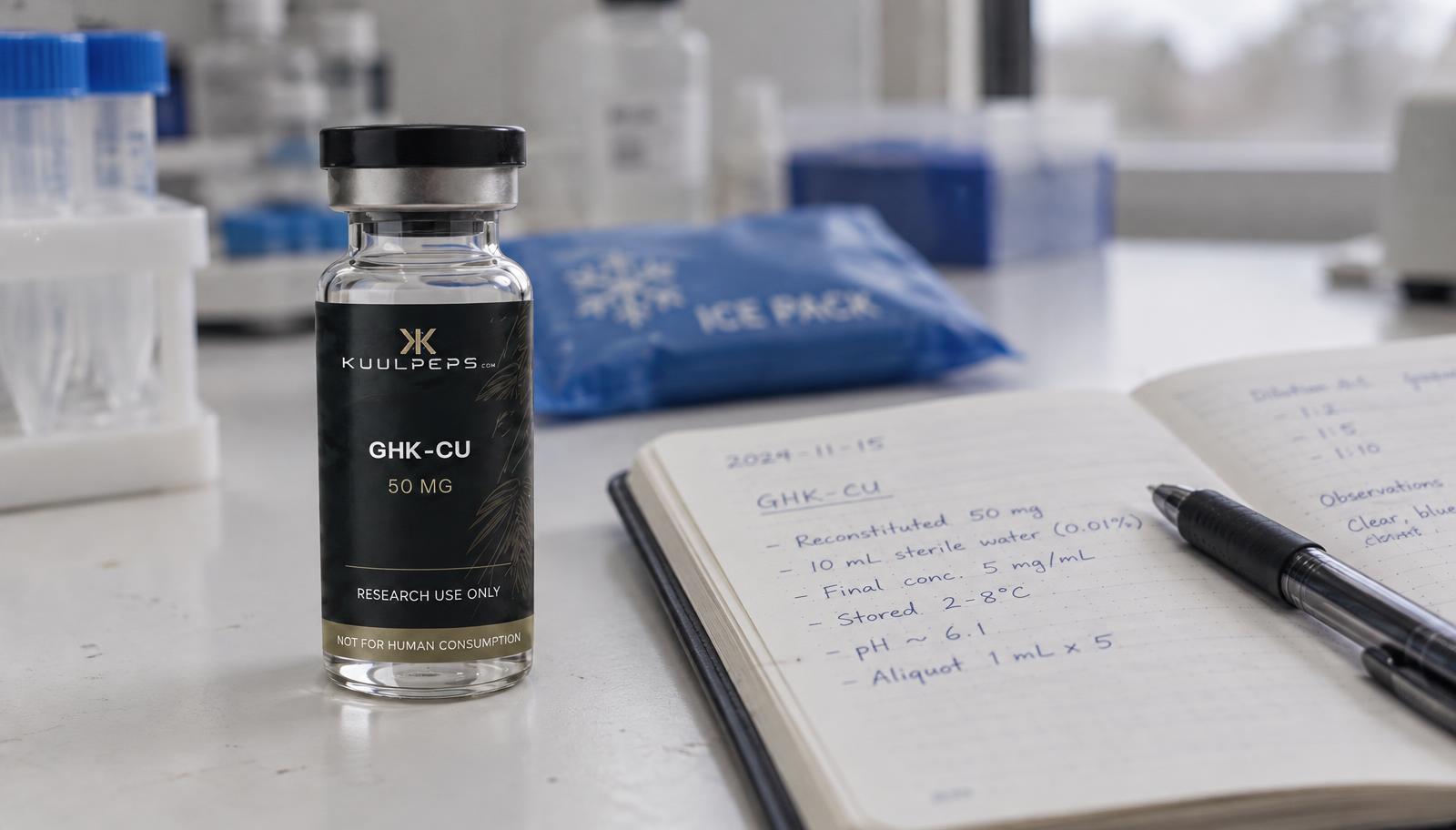
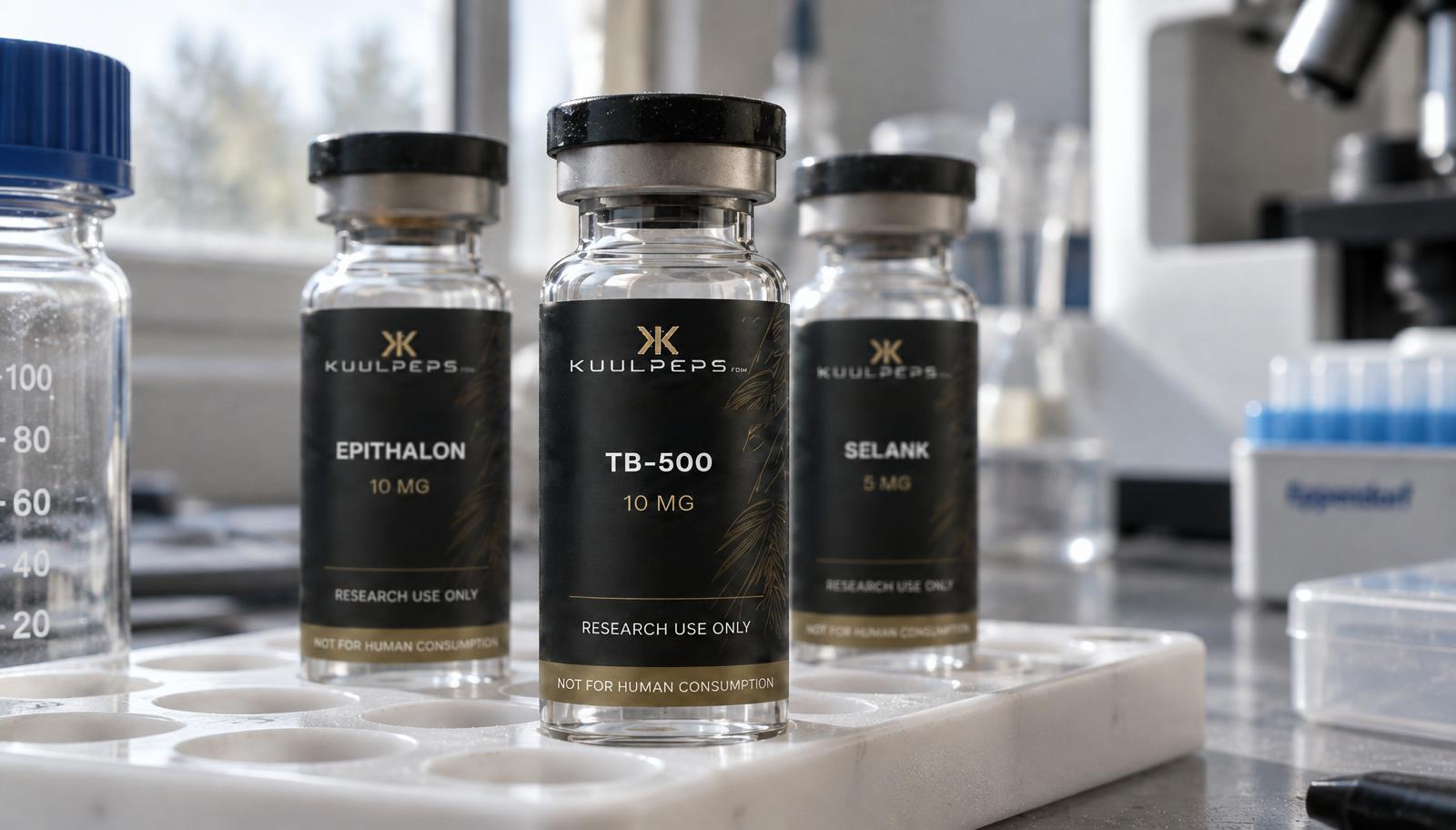
The three blends build on each other: Wolverine is the base, GLOW adds GHK-Cu, and KLOW adds KPV on top of that. Here's how they compare.
Research use only. Not for human consumption.
How the blends build on each other
- Wolverine (€119): BPC-157 10 mg + TB-500 10 mg. Focus: tissue repair models
- GLOW (€139): Wolverine + GHK-Cu 50 mg. Adds skin and collagen research
- KLOW (€159): GLOW + KPV. Adds inflammation signalling research
Strength of evidence
Preclinical research
All three rest mostly on animal and cell studies of the separate components. GHK-Cu has the most human data, mainly from topical skin research. None of the combinations has been tested in human trials.
How to choose
Start from the research question. Repair models only: Wolverine. Repair plus skin and collagen: GLOW. All of that plus inflammation: KLOW. Fewer components make results easier to attribute, so don't pick a bigger blend than you need.
Value versus single vials
Wolverine and GLOW cost less than buying their components separately, and each blend needs only one reconstitution. With free EU shipping from €99, any of the three ships free.
A note on expected effects
Unproven claim
Claims of faster healing, better skin or less inflammation in people are not established for any of these blends. Treat online reports as anecdotes.
Sources & references
- BPC-157 research literature — PubMed
- Thymosin beta-4 research literature — PubMed
- GHK-Cu copper tripeptide research literature — PubMed
- KPV tripeptide inflammation research — PubMed
Educational content only. Nothing here is medical advice, and no KUULPEPS product is offered to diagnose, treat, cure or prevent any condition. Products are supplied for laboratory research use only.
Parent topic
More on recovery
Adaptation happens between sessions. Recovery is the part of the protocol most people optimise last and should optimise first.