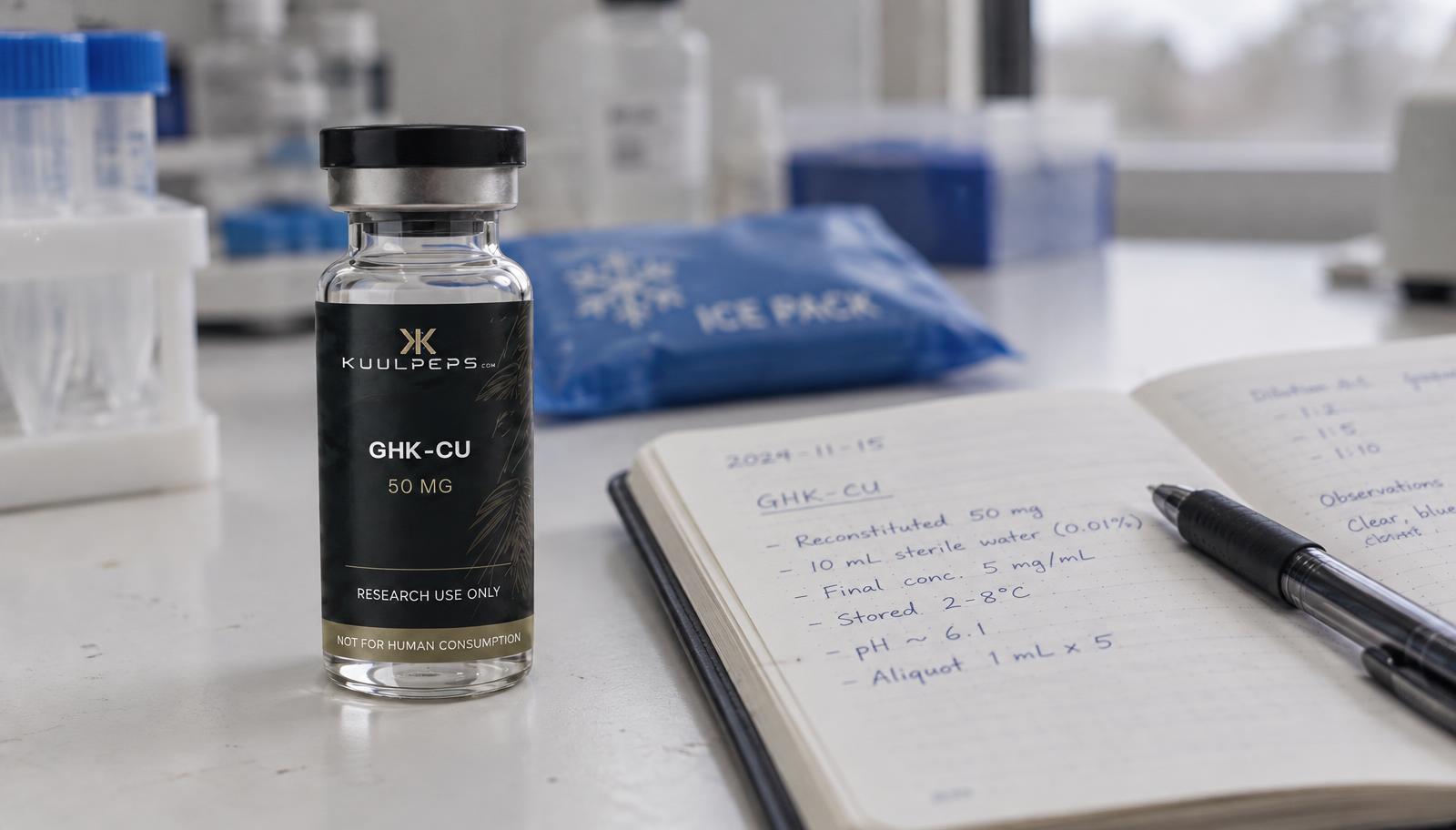
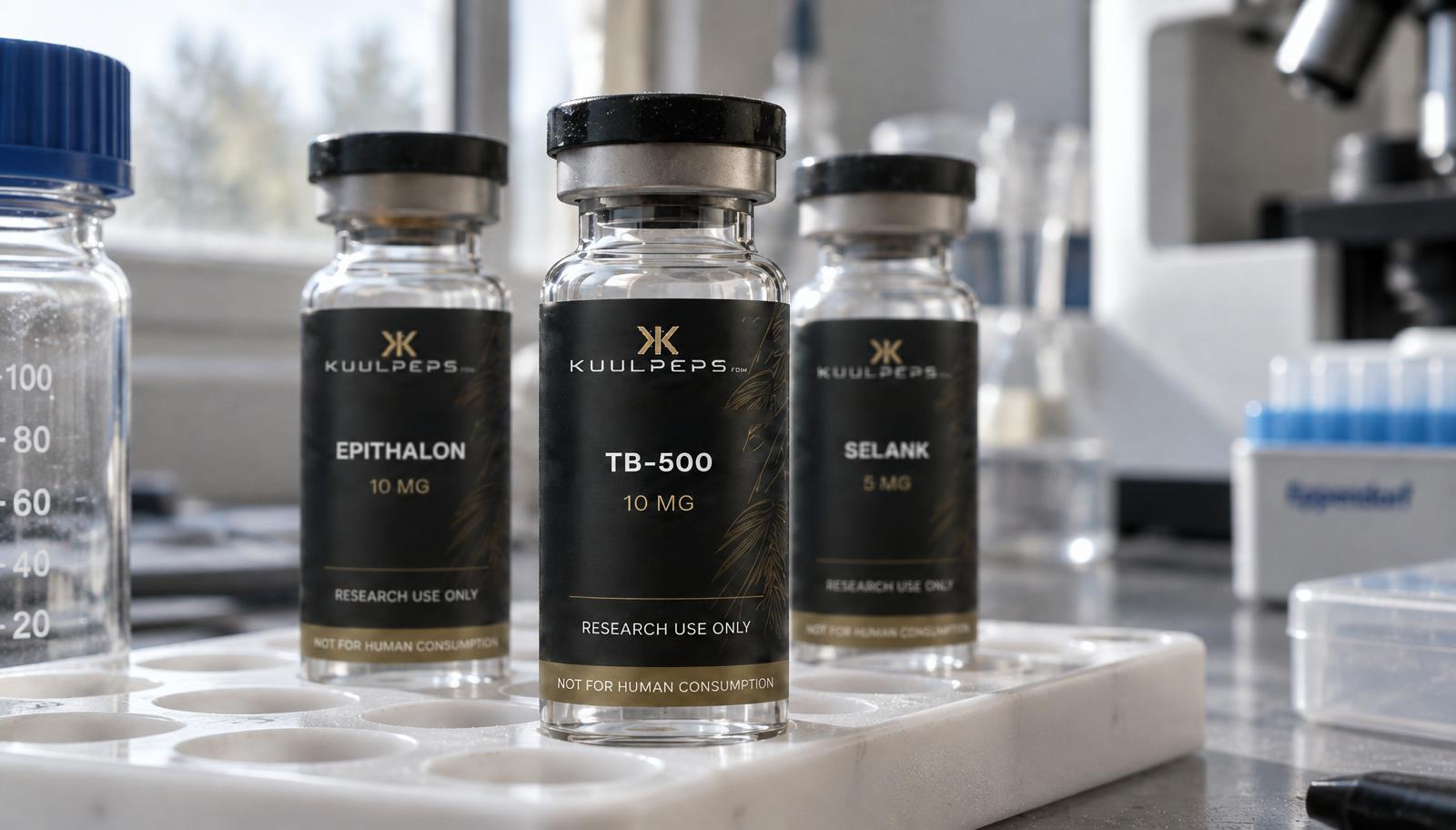
"Wolverine stack" is the community nickname for BPC-157 and TB-500 combined in one vial. The name comes from the tissue-repair themes both peptides are studied for, not from any proven outcome.
This guide summarises what each component is, what the research has actually examined, and what the blend changes in practice for a laboratory. Research use only. Not for human consumption.
What is in the vial
Our BPC-157 + TB-500 blend contains 10 mg BPC-157 and 10 mg TB-500 as one lyophilised powder (20 mg total peptide).
BPC-157 is a 15-amino-acid fragment derived from a protein found in gastric juice. TB-500 is a synthetic peptide based on the active region of thymosin beta-4, a naturally occurring protein involved in cell migration.
Why the two are paired
Preclinical research
The rationale is that the two peptides are studied through different mechanisms. BPC-157 research focuses on blood-vessel formation and growth-factor signalling in animal injury models. Thymosin beta-4 research focuses on actin regulation and cell migration.
No controlled human study has tested the combination. The pairing is a hypothesis built from separate animal and cell data.
What the research has looked at
Preclinical research
Areas where each component has been studied, mostly in rodents or cell cultures:
- BPC-157: tendon, ligament and muscle injury models; gut lining models; blood-vessel growth
- Thymosin beta-4: wound closure, cell migration, heart tissue models after injury
- Both: inflammation markers in animal models
What can realistically be expected
Unproven claim
Online claims of faster healing in people are not supported by reliable human trials. Treat any reported effect as anecdotal. What the blend does offer is practical: one vial, one reconstitution and a lower price than two separate vials (€119 vs buying both singles).
Reconstitution and storage
Established evidence
Store lyophilised at 2–8 °C away from light. Reconstitute with bacteriostatic water, swirling gently. Use our peptide calculator with 20 mg as the total vial content. Keep the solution refrigerated and do not freeze it.
Sources & references
- BPC-157 research literature — PubMed
- Thymosin beta-4 research literature — PubMed
Educational content only. Nothing here is medical advice, and no KUULPEPS product is offered to diagnose, treat, cure or prevent any condition. Products are supplied for laboratory research use only.
Parent topic
More on recovery
Adaptation happens between sessions. Recovery is the part of the protocol most people optimise last and should optimise first.