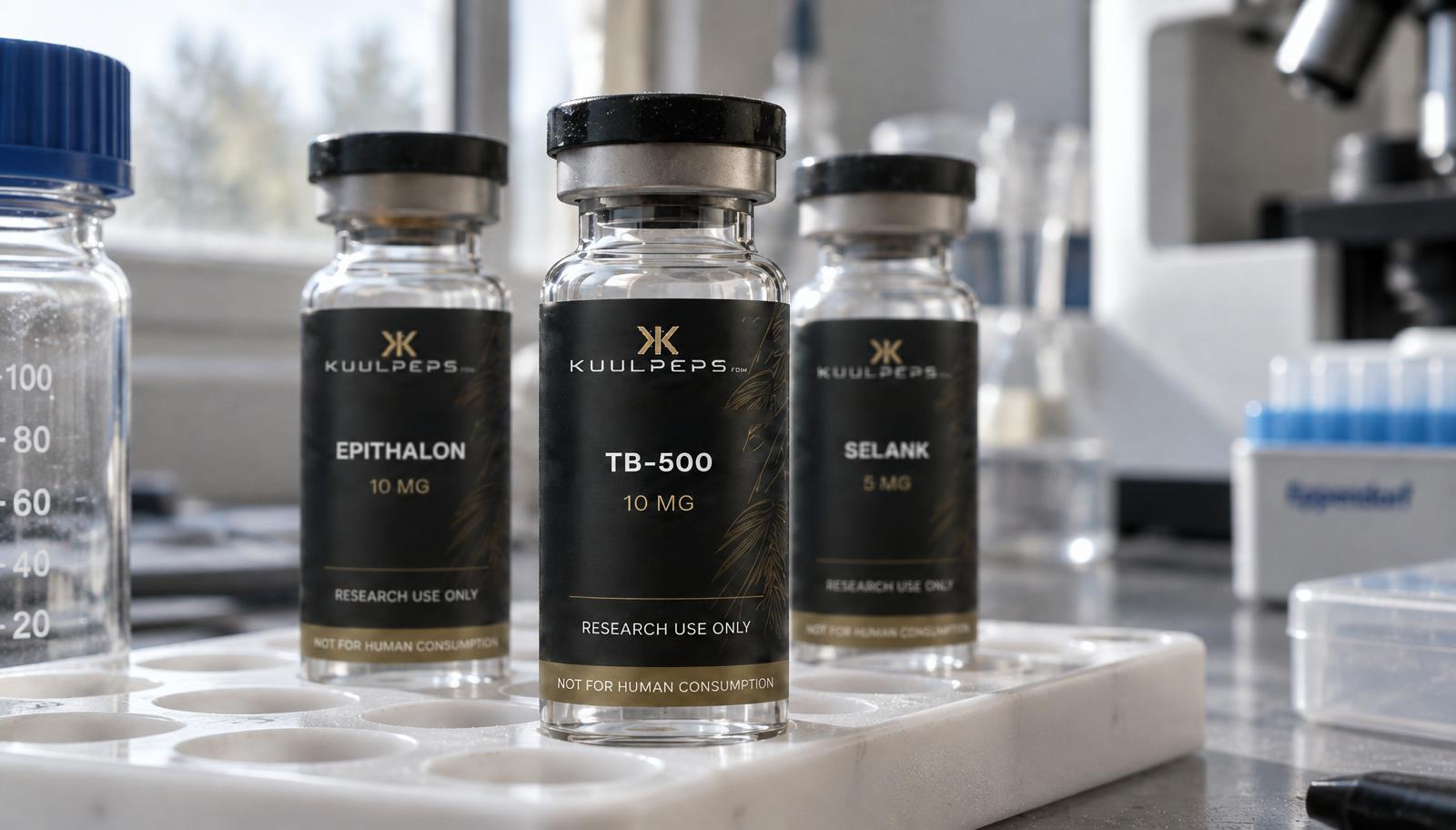
KLOW takes the three GLOW peptides and adds a fourth: KPV. The K in the name stands for KPV.
This guide covers what KPV is, why it is added, and what is and isn't known. Research use only. Not for human consumption.
What is in the vial
BPC-157, TB-500, GHK-Cu and KPV in one lyophilised vial. Each KLOW vial contains BPC-157 10 mg, TB-500 10 mg, GHK-Cu 50 mg and KPV 10 mg — 80 mg of peptides in total. The batch certificate with your order confirms these amounts for your specific batch.
What KPV is
Preclinical research
KPV is a three-amino-acid fragment (lysine-proline-valine) from the end of alpha-melanocyte-stimulating hormone (α-MSH). Research has focused on its anti-inflammatory signalling, especially in gut-inflammation models in mice and in cell cultures.
Unlike α-MSH, KPV is not studied for tanning effects. Human data is very limited.
Why add KPV to GLOW
Unproven claim
The idea is to add an inflammation-focused peptide to GLOW's repair and skin themes. This is a theory based on separate studies; nobody has tested the four together in people.
Price and practicality
KLOW costs €159. KPV is not sold separately in our shop, so KLOW is the only way to include it in a combined protocol.
Handling
Established evidence
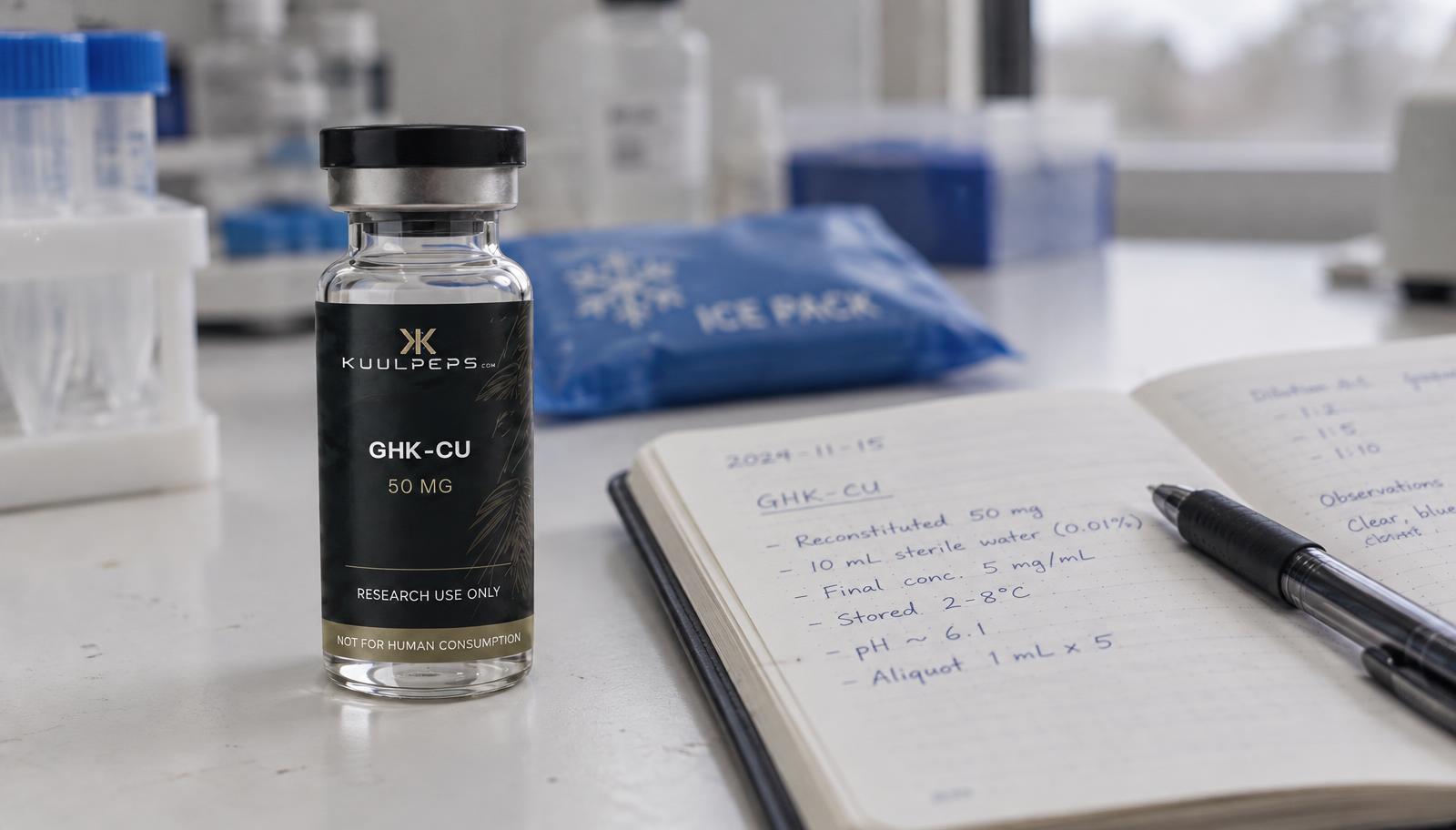
Same as GLOW: 2–8 °C, protected from light, reconstituted with bacteriostatic water and refrigerated after mixing. Expect a light blue solution from the GHK-Cu.
Sources & references
Educational content only. Nothing here is medical advice, and no KUULPEPS product is offered to diagnose, treat, cure or prevent any condition. Products are supplied for laboratory research use only.
Parent topic
More on biohacking
Biohacking is measurement plus disciplined iteration. Guess less, log more, and know which tier of evidence you are standing on.